
Don't Lose Sight
Using Lawrence to inspire a more sustainable approach to work

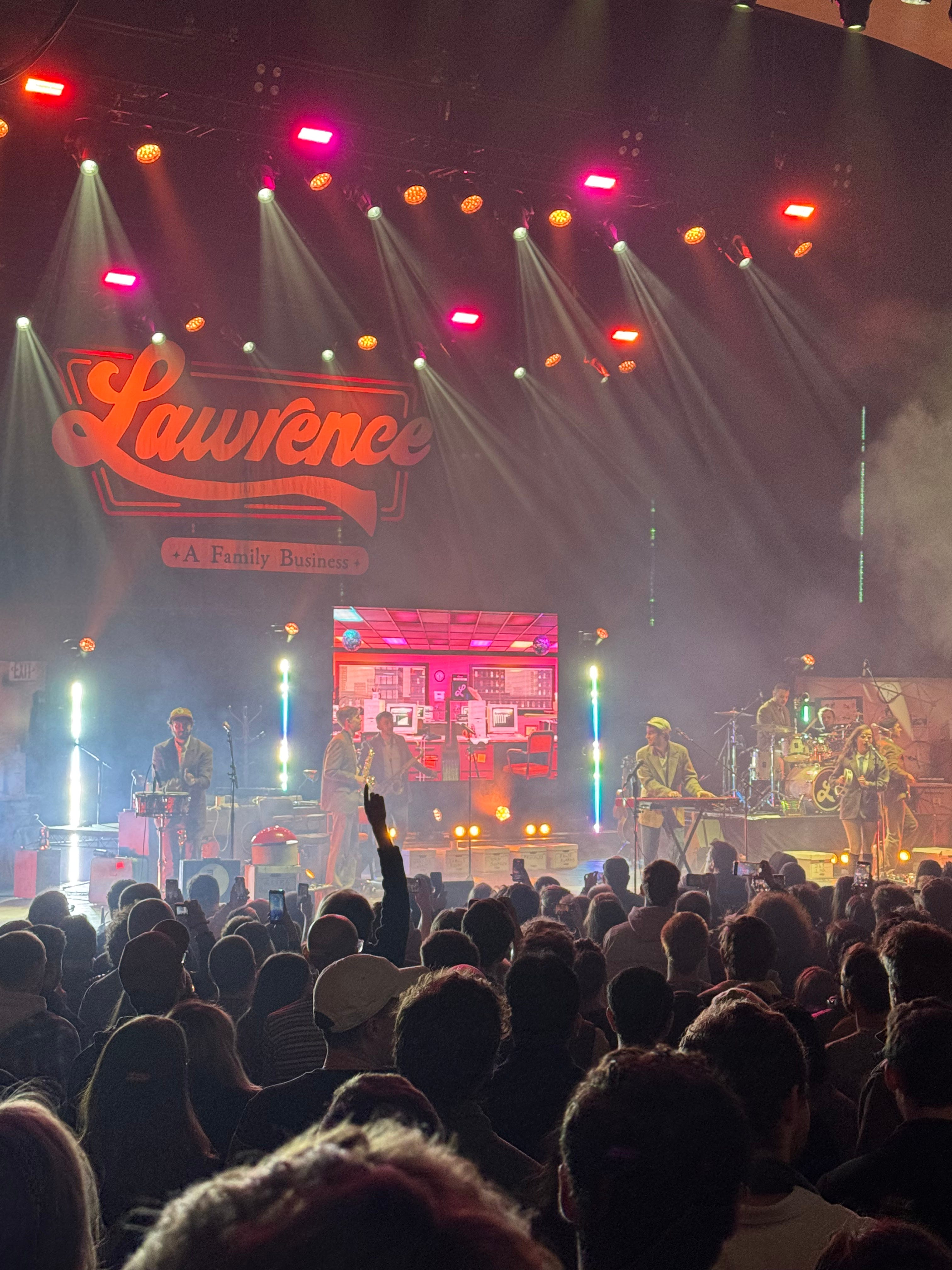
Last week I went through what I can only describe as a gig gauntlet. Three shows in six days. Hip Hop royalty DJ Premier & The Alchemist on Friday, eight-piece soul-pop outfit Lawrence on Monday, and New Zealand’s self-proclaimed coolest and oldest boyband Leisure on Thursday.
All brilliant. All worth going to. I am knackered, but none of them worth the £4 cloakroom fee I paid at each venue just to hang up my coat for two hours. I’m at the age where I get annoyed about these things. Twelve quid total to not carry a jacket around. I’m sure it used to be a quid. But when a few companies own most of the venues, there’s no competition. So you pay what they charge or you carry your coat.
Sound familiar? Extra responsibilities added to your role but same salary. New “strategic priorities” but no additional headcount. More meetings, more stakeholders, more approvals, same hours in the day, same pay packet.
The system extracts more value from you while giving less back. Just like those cloakroom fees. You pay more, get the same service, and there’s fuck all you can do about it because that’s just how it works.
Except one band at those gigs has figured out how to work within a system that doesn’t fully work for them anymore while building something more sustainable and, lets be honest, equitable for themselves. And their approach maps directly onto how you can make your work life feel less shit without waiting for your organisation to fix itself or be pressured into doing something from a regulator or government.
Meet Lawrence
Lawrence are an eight-piece bundle of fun fronted by brother-sister duo Clyde and Gracie Lawrence, backed by childhood and college mates. Proper musicians. Bordering on making you sick how talented they are.
They’ve had viral TikTok moments, 1.2 million monthly streams on Spotify alone (which is about $4000 - split by right owners, writers etc) and their track “Don’t Lose Sight” was in that Microsoft Surface advert a couple of years back. They’ve opened for The Rolling Stones at MetLife Stadium the kind of opportunity most artists would dine out on for an entire career.
But what made me properly sit up and take notice wasn’t just their ridiculously catchy tunes that make you slide around the kitchen. It’s that they’re still fully independent. No major label deal. They manage their own tours, run their own merch business, engineer their own sound, stage their own headline shows.
Eight mates running their band like a small business in a massive industry designed for big players, not people like them.
Sound familiar?
The System Works – Just Not for Everyone
“Ever since we started touring, we noticed what felt like lopsided deal mechanics in certain aspects of the live music industry.”
After a few years of touring, Clyde and bandmate Jordan Cohen (tour manager and sax player) realised the deck was heavily stacked against them. Every night after gigs, they’d settle up the money and see exactly how little actually came back to the band.
Here’s the breakdown: A fan pays £42 for a ticket to see Lawrence. £30 base price, £12 in Ticketmaster fees.
Lawrence – the artists fans came to see – get £12 of that £42.
Not £30. Twelve quid.
From that £12, roughly half goes to touring expenses. Van (they called their tour van Vandy Newman), fuel, hotels, gear, food, crew. That leaves £6 per ticket for an eight-piece band. Before tax. And they pay for their own health insurance.
The £12 in fees that us fans pay? Goes entirely to Ticketmaster. The artist gets nothing. Zero say in what those fees are. Zero negotiation. They find out the same way fans do, by logging onto Ticketmaster when tickets go on sale.
The system they perform in isn’t broken. Ticketmaster and Live Nation are not evil organisations with the sole aim of stitching us all up ( I don’t think?) but they made $17 billion in 2023. It’s working exactly as designed. To make money. Just not for all artists. And as fans, we don’t have a choice.
Your Version
You do the work. The actual work. Then seven approval layers add three weeks but zero insight. Stakeholders who weren’t involved suddenly need “visibility.” Meetings get scheduled to discuss the meeting. The credit somehow ends up with people who weren’t in the room. You get a muffled shout out in a townhall no one wants to be at.
A colleague of yours left six months ago and didn’t get replaced, so their work got divvied up amongst the team. Your salary didn’t change. Your job title didn’t change. Your workload increased by 30%. Your job is an ampersand job now.
The system isn’t necessarily broken. The organisation you work for is likely profitable. Leadership’s getting bonuses. Shareholders are happy-ish. It’s working brilliantly for some people. Just no longer for you and the people getting burnt out trying to handle the ever increasing tasks and responsibilities laid upon them.
That’s the reality right now isn’t it. Systems work for who they’re designed to work for. When you’re not one of those people, you’ve got two choices, wait for the system to evolve, or make small adjustments yourself without the need for any sign off that swing things slightly more in your favour.
What Lawrence Did
In January 2023, Clyde testified to the US Senate about how the system worked. Not complaining it was broken, but explaining the maths that make it nearly impossible for small and mid-sized artists to earn a sustainable living.
His testimony went viral. Senators quoted Taylor Swift lyrics. Everyone agreed something should be done.
Then what happened?
Sixteen months later, the Department of Justice filed a lawsuit against Live Nation seeking to break it up. It’ll probably take 5-10 years to resolve. Long.
You know what Lawrence did while waiting? Toured 100+ cities. Released an album. Managed (Or even minded?) their own business. Kept building.
They didn’t stop working while waiting for the system to evolve. They crafted their own small wins.
In September 2023, eight months after Clyde’s testimony, Live Nation announced they’d eliminate merchandise fees at all their US club venues. Artists could now keep 100% of merch sales instead of the company taking a cut. Before, Live Nation, or whoever the promoter was, would take 25% of all merch sales.
Real money in artists’ pockets. Immediate. Tangible. I say its ‘just’ an extra 25% of merch sales in the band’s pocket, but its movement. A small win that made hundreds of artists’ lives a little more sustainable.
But Lawrence had already been running their own merch business for years. They’d already solved that problem for themselves.
They also negotiated their own ticket sales with some venues they were performing at to circumvent the fees. They built their own ticketing system! Fans could purchase tickets directly through the band. Makes complete sense.
They didn’t wait for the system to evolve. They made their situation sustainable and a little more equitable by controlling what they could control.
Your Small Wins
When you’re exhausted, you don’t have 5-10 years to wait for organisational evolution. You need something that makes this week slightly more bearable than last week.
You may not want to do a Clyde and write massive op-ed pieces in mainstream media and talk to your version of the senate. Especially in this redundancy era, being seen as disruptive may be more of a risk you’re willing to take, but small wins don’t come from waiting for the system to work better for you.
They come from you making small adjustments:
Decline one meeting that serves no one. Not making a massive speech about it. Just: “I don’t think I’ll add value here, carrying on with X instead.” Immediate time back. When nothing collapses, others notice. Culture shifts incrementally.
Build one direct relationship. Skip the email chain with seven people cc’d. Have the conversation with the person who needs your work. Your small win is efficiency. The pattern you start is that direct beats bureaucracy.
Say no to one unnecessary approval. “I’m going to crack on with this, happy to update you when there’s something ready to go.” Not burning bridges, just protecting momentum. Your small win is simply progress.
Protect one hour for actual work. Block it. Turn off Slack / Teams. Stick yourself on Do Not Disturb. I know right… revolutionary. Do the thing you’re meant to be doing. The most important thing. The thing that matters most, right now. Your small win is meaningful progress instead of managing everyone’s urgency.
None of these change the system right now. But each simple step makes work slightly more sustainable for you this week. When enough people see and feel your more equitable approach by making these tiny adjustments, the system then eventually evolves. People see nothing bad has happened. Anxiety drops. Not because leadership mandated it, but because individuals made small adjustments that accumulated.
The awareness bit matters as well, when its time. Clyde’s Senate testimony didn’t immediately change anything. But it made other artists aware of the maths. It put public pressure on Live Nation. It shifted the conversation from “this is how it works” to “this works for some people but not all of us.”
At work, this looks like naming what’s actually happening:
In your one-to-one: “Since Sarah left and we didn’t replace her, I’ve picked up her workload on top of mine. That’s not sustainable. I suggest we stop doing…/ what can we stop doing?”
In the team meeting: “This approval process adds three more weeks but I’m not clear what value it adds. Do you mind if we try a quicker way?”
To your colleague: “I’ve started declining meetings where I don’t add value. I’ve started reducing the meetings I host by 15 minutes. Productivity’s gone up and nothing’s collapsed. Worth trying?”
You’re not saying the system is broken. You’re just naming that it doesn’t work optimally for everyone anymore. Sometimes that’s enough for small adjustments that make more people’s work sustainable.
Just Give Yourself Permission.
Government regulation on flexible working, 4 day work weeks, meeting time caps, it all takes years to shift at scale. Lawrence didn’t wait for the Senate to reform the industry or the DOJ to break up Live Nation. They managed their own tours, ran their own merch, built direct fan relationships, stayed independent. Measured the small wins. Marginal gains each time.
And each one made them slightly more sustainable in a system designed for big players. They can now keep doing the thing they love and get closer to what they deserve for it.
Make small wins for yourself. Don’t wait for the system to evolve. Build one thing you control. Decline one thing that drains you. Protect one hour that matters. For you, that could be massive.
If enough people do the same, the system evolves. Not through top-down reform, but through accumulated small adjustments that prove better ways exist. Then that just becomes normal. Then that becomes they way we do things around here.
Make one small win this week. Then another next week. Not waiting for permission. Not waiting for the big change. Not fussed about anyone else.
Just making your part slightly more sustainable, until enough people do the same and the system evolves.
What’s your small win this week?
Maybe it’s taking 5 minutes off to listen to a Lawrence track.
🤝 Want To Work With Me?
There are several ways we can collaborate:
And there are several ways your employer can cover the cost!
Have me speak at your next event or conference
Bring me in for workshop sessions with your team, leaders or employees
Sponsor my newsletter
Article / Blog Contributions
1-1, group or team coaching
Share your minimalist tips in the paid newsletter
Join my launch team for book 2, working title Relentless (exciting!!)
If you’re interested in any of these opportunities, please drop me an email at info@lessisprogress.com or DM me on Linkedin / Instagram / Substack