
The Dilla Gaps
How J Dilla can remind us to play in the 'in-between'

Do you remember a time when we used to carry coins around in our pockets? Maybe some of you still do, but I distinctly remember a number of occasions where I’d get home from work (or a night out), slump down on the sofa and those coins would trickle out of those pockets, and then down the side of the sofa. Like a rabbit looking for a burrow.
Some would be retrieved and other coins would remain there, lost to the sofa into a black hole for an eternity, making best friends with the crumbs from that Walkers Cheese and Onion grab bag, a pen lid, what looks like a bit of jaffa cake, one of the thousand or so hairbands your partner ‘loses’ and the crunchy bottom bits of the fish and chip bag. Settled, sedentary and only to be rescued when lifting the cushions to hoover before you have friends round.
We’ve all experienced that moment, that sudden discovery of an extra quid. Nice! An unexpected lost treasure in the space that was there all along.
I’ve been thinking about why I keep sharing this weird image and I think it’s because most of us have been trained to look for value, solutions, a bit of energy or even a few more people similar to us in the obvious places. The team at work. The formal meeting. In the industry standards. On another course or qualification. Buying another planner. Downloading an app. Looking for a new job. YouTube at midnight. The same places you would normally look. They worked before, right?
Not many people look in the gaps between these traditional spaces. Which is exactly why the gaps could be where the interesting stuff is.
This is where your opportunities could be, hidden, in plain sight.
In between the cushions is your next connection. Between the crevices of your furniture is that next idea. Under the sofa is the collaboration that you thought didn’t exist. Lying in that unknown sticky stuff you want to sniff but think better of it is potentially your next career. The one you’ve always wanted.
Treasures shouldn’t be there, according to, well, logic, but there they are. Waiting for you to venture into that non traditional space.
Disclaimer - This is a metaphor. Please don’t expect your opportunities to actually be laying under your pillow. Unless you are the tooth fairy, then good for you.
“The drums are messed up! The time is wrong!”
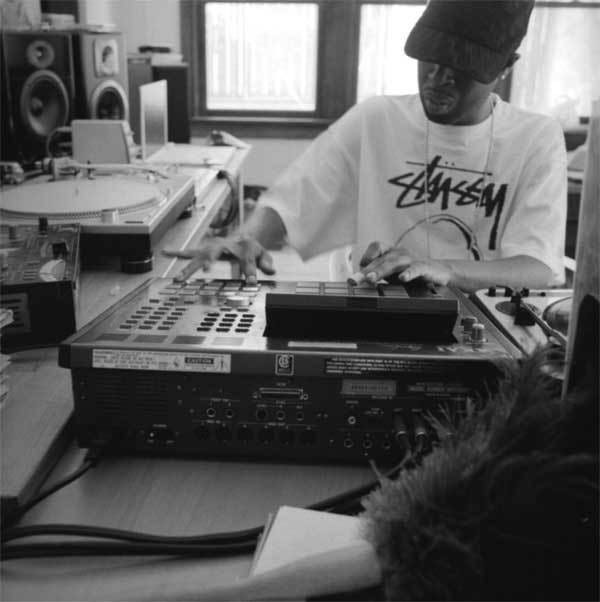
The late hip hop producer J Dilla regularly played in these spaces.
Widely regarded as one of the most influential and original producers of the last fifty years. Kendrick Lamar, Questlove, Erykah Badu, Q-Tip and Common describe him in terms usually reserved for once in a generation talents.
Dilla was different. He wasn’t more skillful than other producers of that time, in fact when he died at age 32, he had never had a pop hit, but it was where he worked that made him stand out as one of the most important musical figures.
He created a new kind of musical time-feel with his drum machines reinventing the way musicians play. Dilla is described as a genius who transformed the sound of popular music and behind some of the most influential rap and R&B acts of his day.
As you probably know, traditional music puts the emphasis on the 1 and the 3, but I bet you know someone who can’t clap ‘in time’ when asked to do so at a gig. The downbeat, the ‘expected place’, the on-grid moment where the kick drum lands and everything feels standard, structured. Most producers work there. It’s where music is ‘supposed’ to happen.
Dilla heard something in the tiny spaces between.
His drums landed so slightly behind the timing of the beat. Deliberately. In the micro-timing between the 1 and the 2. Where nothing was supposed to happen. Where the grid said there was nothing worth finding. Where listeners wait anticipating the next beat.
Initially when Questlove first heard a J Dilla beat, played for him by Q-Tip on a tour bus, his initial reaction was utter confusion. He famously said, "The drums are messed up! The time is wrong!"
Wrong. Not music industry standard.
Dilla was famous for turning off quantisation (the timing grid) and playing his drums manually, off the digital grid. It sounded utterly bizarre to someone so accustomed to playing to a strict metronome. Questlove’s impression transformed from confusion to awe. He described Dilla’s micro-chopping technique on a drum machine as the equivalent of someone solving a “10,000-piece puzzle” and when they were in the studio together, he would ask how he would like him to play, “like Prince or like you?”
It eventually changed how Questlove approached live drumming and timing.
Heres a good video to show how he evolved his drumming when working with Dilla and D’Angelo.
Musicians who heard it said it felt more human than anything that was expertly and precisely on the beat. More true. More live.
The smallest move away from tradition became the biggest cultural impact. Neo-soul around that time especially leaned into it. Dilla’s minuscule time delay was so in demand, other producers quickly borrowed and adapted his signature swing.
Kanye West shared how he used Dilla’s drums and the ‘Dilla swing’ to achieve some of his sounds.
Janet Jackson’s 1997 hit ‘Got ‘Til It’s Gone’ was controversial because the production team of Jimmy Jam and Terry Lewis were accused of ‘stealing’ Dilla’s style to create the song.
"It sounded like the kick drum was played by a drunk three-year-old... It was the most liberating moment. I said, 'I've been trying to be a machine for 15 years, and this guy is trying to be a human."
So here’s the thing about all of this.
The coins down the side of the sofa were always there. Dilla saw and heard a space that was traditionally unoccupied.
These things aren’t found by looking harder in the obvious places. Doing the obvious things.
In an attempt to feel less drained from her team members, who were all opposite to her, one previous client recently searched through the internal companies event pages to see if there was a topic she was really into that would re-energise her.
The events were always there. Hundreds of them, always. She had just never looked there, in that way before.
Rather than waiting for a transactional bit of work to appear to generate a conversation, speak to that person now.
Maybe you’ve spotted or heard of an interesting problem at work that appears to have fallen between teams or has no immediate owner. Whilst they argue for years about whose responsibility it is, go and fix it yourself.
The solution to your most interesting problems might not be in the BAU where you’ve always been looking for it.
Check between the cushions. Turn off the grid. See what happens
You might just be sitting (do you like how I brought it back to the sofa…) on something that changes everything.
If you haven’t got your copy of Relentless: The Power of Doing Less in a Workplace that Demands More yet, you can get it here. Now available at wherever you buy books.
Plus, if you want some copies for your team, my publisher is doing, quite frankly, an incredibly generous discount for my friends, so drop me a line and I’ll sort you out.
💪 Want To Work With Me?
There are several ways we can collaborate:
And there are several ways your employer can cover the cost!
Have me speak at your next event or conference
Bring me in for workshop sessions with your team, leaders or employees
Sponsor my newsletter
Article / Blog Contributions
1-1, group or team coaching
If you’re interested in any of these opportunities, please drop me an email at chris@chrislovett.co.uk or DM me on Linkedin / Instagram / Substack